How to Evaluate Smart Glasses for Blind Travel

Editorial guide

How to Evaluate Smart Glasses for Blind Travel

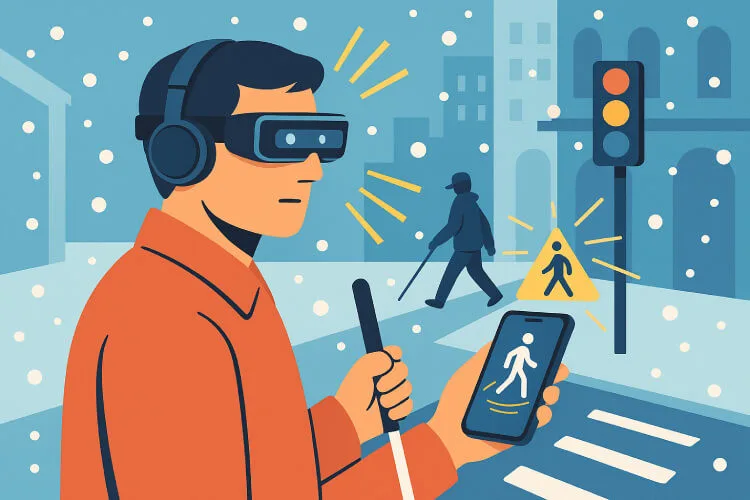
Mobility smart glasses sound promising, but the useful question is not whether the device looks advanced. It is whether the feedback is clear enough to improve travel without creating a second layer of confusion.

Reader route
Best for Readers, families, and instructors
Use this page to Get oriented before going deeper
Next move Open related guides and checklists
Published May 25, 2026
Briefing

is why smart glasses should be evaluated like any other mobility tool: by the quality of the information they provide, the amount of training they demand, and how well they fit beside the cane, guide, landmarks, and route habits you already trust.

AI glasses foster independence for visually-impaired people

Visually-impairedpeople are finding new independence with AIglasses. "CBS Saturday Morning" meets Emeline Lakrout, ...

  • Channel: CBS Mornings

Video source: CBS Mornings

Rapid read

Key takeaways

  • 01The best smart-glasses test is whether the feedback becomes useful while you are actually moving, not while standing still in a demo.
  • 02Obstacle alerts need to stay understandable in busy environments where sound, pace, and route decisions are already competing for attention.
  • 03A promising device is still only worth keeping if it complements your existing mobility method instead of replacing judgment you already use well.
01

Start with the kind of obstacle feedback the glasses actually give you

A mobility device is only as useful as its feedback loop. Before worrying about brand hype, figure out what the glasses tell you, how they tell you, and how quickly you can turn that signal into a walking decision.

If the feedback is vague, delayed, or easy to confuse with other travel cues, the device may add cognitive load instead of reducing it.

  • 01Test whether you can tell the difference between a warning, a directional cue, and a general status signal.
  • 02Notice how fast you understand the alert while already in motion.
  • 03Favor devices whose signals stay distinct under street noise or indoor echo.

How to Evaluate Smart Glasses for Blind Travel
02

Check whether the device still makes sense in busy and unpredictable environments

Many mobility tools feel strongest in controlled demos. Real travel includes crowds, moving hazards, tight interiors, reflective surfaces, and fast transitions from one environment to another.

A good evaluation asks where the glasses help consistently and where they become harder to trust without a backup method.

  • 01Try the device in at least two different environments, such as an open walkway and a cluttered indoor space.
  • 02Notice whether moving obstacles create clear useful cues or just more noise.
  • 03Track when you still rely on landmarks, cane line, or guide technique first.
How to Evaluate Smart Glasses for Blind Travel
03

Measure the learning curve before you treat the tool like everyday gear

Some devices are promising but only after practice. That is not a flaw by itself, but it does change how you should judge the purchase. A tool that needs structured repetition should be treated like a training investment, not an instant fix.

Give yourself room to learn the signal language slowly so you can tell the difference between weak design and normal early adaptation.

  • 01Set a short repeatable practice route instead of changing variables every session.
  • 02Write down what each alert seemed to mean and where confusion happened.
  • 03Delay big travel decisions until the signal pattern becomes familiar enough to trust.
How to Evaluate Smart Glasses for Blind Travel
04

Decide whether the glasses complement your current travel method

Smart glasses should strengthen mobility choices you already know how to verify. They work best when they add another useful layer of information rather than asking you to abandon the cane, route memory, or environmental checks that already protect you.

The final decision is less about novelty and more about fit. Keep the device if it sharpens your route decisions. Let it go if it keeps fighting the method you already use safely.

  • 01Compare the glasses against one real travel problem you want help solving.
  • 02Keep your primary mobility method in place while testing the device.
  • 03Adopt the tool only if it improves confidence without making decisions slower or muddier.

FAQ

Frequently asked questions

01Can smart glasses replace a white cane or other primary mobility method?

They should be treated as a complement, not an automatic replacement. Keep your primary mobility method in place while you test whether the glasses add useful obstacle information without weakening the checks you already trust.

02What should you test first when trying mobility smart glasses?

Test the feedback itself first. You need to understand what each alert means, how quickly you can react to it, and whether it stays clear while you are moving through normal travel noise.

03How do you know the device is worth keeping?

It is worth keeping when it consistently helps with a real travel problem, such as spotting obstacles sooner or improving confidence in busy spaces, without slowing your decisions or making your existing route checks less reliable.