How to Evaluate Direction-Cue Shoes Before You Trust Them on a Real Route

Editorial guide

How to Evaluate Direction-Cue Shoes Before You Trust Them on a Real Route

A vibrating shoe cue can sound elegant on paper because it leaves your ears free. The real question is whether the signal stays clear enough to help when routes are noisy, delayed, or more complicated than a simple left-right demo.

Reader route
Best for Readers, families, and instructors
Use this page to Get oriented before going deeper
Next move Open related guides and checklists
Published June 18, 2026
Briefing

a clever signal is not the same thing as a trustworthy travel tool. Before direction-cue shoes earn a place on a real route, you need to know whether the prompts are easy to interpret, whether they arrive in time, and whether they work with your cane and route judgment instead of competing with them.

Vibrating Shoes Warn Blind People to Obstacles in Their Path

There are already smartphones and smart watches, so why not smartshoes? At least one company thought about that and how ...

  • Channel: Inside Edition

Video source: Inside Edition

Rapid read

Key takeaways

  • 01A non-audio cue is helpful only if the traveler can read it instantly and calmly.
  • 02Direction-cue wearables should complement cane travel and environmental listening, not replace them.
  • 03The best test is what happens when a route gets messy, late, or crowded rather than when everything is ideal.
01

Start by learning the vibration language somewhere low-stakes

If the shoes or insoles use left-right cues, you should be able to identify them without hesitation before you ever test them outdoors. That first stage belongs in a quiet, controlled space where the traveler can focus on the feel of the signal rather than on traffic or obstacle management.

A tool that requires constant decoding will drain attention fast. The cue should feel obvious enough that it supports movement instead of becoming a second task layered on top of travel.

  • 01Practice the cue pattern indoors before route testing.
  • 02Check whether the signal is strong and distinct in both feet.
  • 03Notice whether reading the cue feels immediate or mentally expensive.
How to Evaluate Direction-Cue Shoes Before You Trust Them on a Real Route
02

Test how the prompts fit beside your normal mobility method

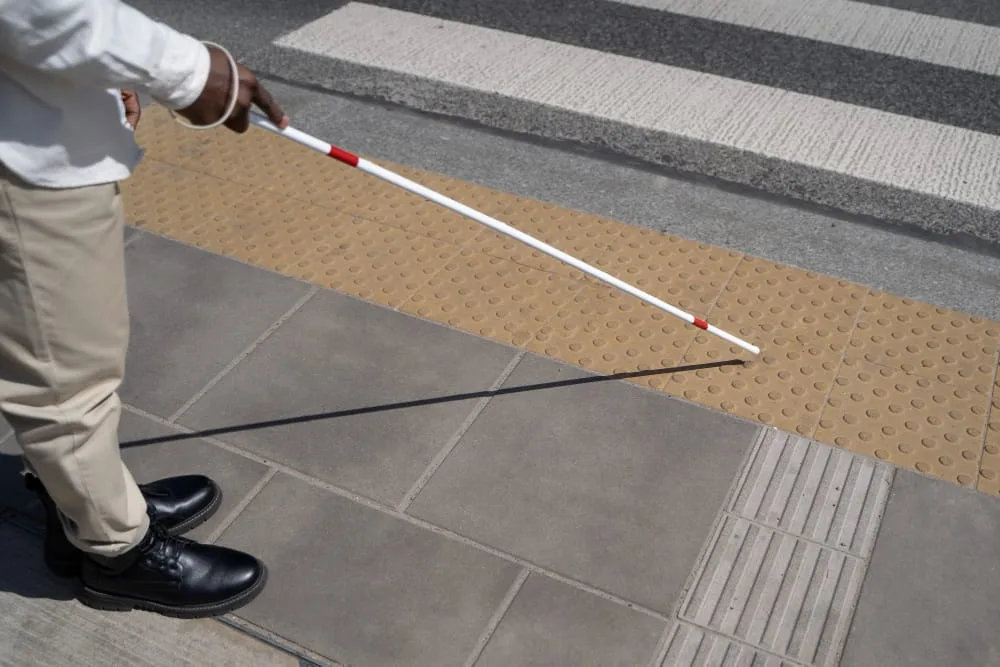
A direction cue becomes useful only when it cooperates with how you already move. Cane users still need obstacle feedback and surface information. Travelers who rely heavily on hearing still need to listen for intersections, open space, and moving hazards without being distracted by the wearable.

The goal is not to prove the shoes can guide a whole route alone. The goal is to see whether they reduce workload or quietly add more of it.

  • 01Use the wearable alongside the cane, guide, or route routine you already trust.
  • 02Check whether the cue helps orientation without interrupting listening.
  • 03Treat any cue that competes with safety habits as a warning sign.
How to Evaluate Direction-Cue Shoes Before You Trust Them on a Real Route
03

Watch what happens when GPS timing or route conditions get messy

The cleanest demo happens on a simple path with strong signal and few surprises. Real routes are worse. Turns come late, sidewalk choices split, and construction or crowds force decisions before the wearable can explain them perfectly.

This is where product promise meets route reality. A useful system should still leave the traveler ready to pause, verify, and override the prompt when the environment says something different.

  • 01Test routes with a few real turns and minor complications, not only straight paths.
  • 02Notice whether cues arrive early enough to act on them comfortably.
  • 03Practice ignoring or overriding the prompt when the environment disagrees.
How to Evaluate Direction-Cue Shoes Before You Trust Them on a Real Route
04

Decide whether the wearable saves attention or just relocates it

Some tools feel impressive because they move information to a new body channel, not because they make travel easier. If the traveler spends the whole route waiting for the next buzz, confidence may actually shrink instead of grow.

A worthwhile wearable should create cleaner decision-making, not dependency. After several tests, the traveler should be able to say exactly where the cues help and where ordinary route skills are still doing the heavier work.

  • 01Judge the tool by reduced confusion, not novelty.
  • 02Ask where the wearable clearly helps and where it adds no real gain.
  • 03Keep proven orientation habits as the primary safety layer.

FAQ

Frequently asked questions

01Can direction-cue shoes replace a cane or other mobility method?

No. They may add route guidance, but they do not replace obstacle detection, environmental listening, or the judgment that comes from established mobility skills.

02What should I test first with a vibrating route wearable?

Test whether you can recognize the signals quickly and consistently in a safe indoor setting. If the cue itself is not easy to read, the route test will not tell you much.

03When should I stop trusting the prompt and verify the route myself?

Pause and verify whenever the cue arrives late, conflicts with the environment, or leaves you uncertain about the next move. The wearable should support your judgment, not overrule it.