How Adapted Ride-On Toys Can Support Early Mobility and Play

Editorial guide

How Adapted Ride-On Toys Can Support Early Mobility and Play

Adapted ride-on toys can help children with movement challenges explore, play, and interact socially when adults treat mobility as participation, keep adaptations child-specific, and prioritize safety and developmental joy.

Reader route
Best for Readers, families, and instructors
Use this page to Get oriented before going deeper
Next move Open related guides and checklists
Published July 2, 2026
Briefing

A practical adapted-toy plan should balance enthusiasm with caution: low-cost creativity can be powerful, but each build has to fit the child, involve appropriate adults, and stay grounded in safety.

A modified ride-on toy jeep to help a special-needs child learn to drive

Ruo En, eight, has cerebral palsy. Twice a week she visits Tech Able, an assistive technology centre run jointly by SG Enable and ...

  • Channel: SG Enable

Video source: SG Enable

Rapid read

Key takeaways

  • 01Independent movement affects social interaction and self-motivated play.
  • 02Traditional adaptive equipment can be large, expensive, and intimidating to other children.
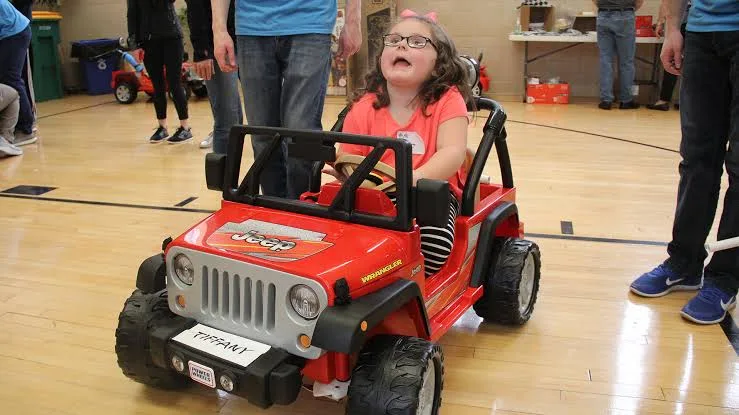
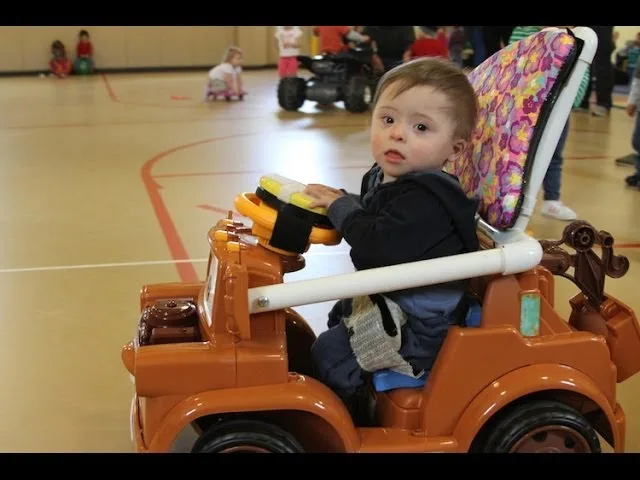
  • 03Ordinary ride-on toys can be modified with straps, PVC rails, and accessible switches.
  • 04Adaptations should depend on the child's needs and keep the toy fitting naturally into daycare or playground settings.
01

Frame mobility as play and participation

Children who cannot move independently can also miss chances for social interaction and self-directed play. An adapted ride-on toy can change a child’s role from being carried into the action to initiating movement toward people and objects.

That matters for confidence and orientation: movement gives a child reasons to notice space, sound, direction, and choice, even before formal travel skills are mature.

  • 01Describe mobility as access to play, not just equipment use.
  • 02Notice how independent movement changes social interaction.
  • 03Connect early movement to curiosity about space and direction.
How Adapted Ride-On Toys Can Support Early Mobility and Play
02

Keep adaptations simple but child-specific

Simple parts such as PVC rails, supportive straps, and large accessible switches can be meaningful when they match the child's posture, reach, strength, and control.

Avoid implying one universal build. Families should work with therapists, mobility specialists, or experienced programs when possible because seating, speed, switch placement, and supervision all matter.

  • 01Match switch placement to the child's reliable movement.
  • 02Use supports such as straps or rails only when appropriate.
  • 03Seek therapist or specialist input before independent use.
How Adapted Ride-On Toys Can Support Early Mobility and Play
03

Choose environments that make the toy socially natural

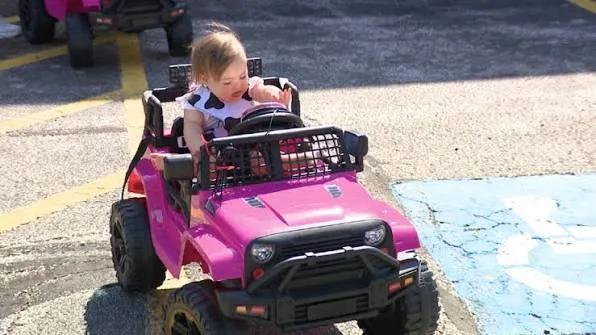
A modified toy can fit into daycare or playground life better than bulky equipment when adults choose safe, open, supervised spaces where the child can participate near peers without being isolated by the device.

  • 01Start in open, flat, supervised spaces.
  • 02Use the toy near peers when it supports inclusion.
  • 03Avoid slopes, obstacles, traffic, and crowded uncontrolled areas.
How Adapted Ride-On Toys Can Support Early Mobility and Play
04

Let joyful movement support later mobility confidence

Adults can narrate direction, stopping, turning, near/far, and sound cues while the child plays, turning movement into low-pressure spatial learning.

Adapted play should not replace formal mobility instruction. It can, however, support confidence, cause-and-effect learning, and the belief that movement belongs to the child.

  • 01Use simple language such as stop, go, left, right, near, and far.
  • 02Celebrate exploration rather than perfect steering.
  • 03Treat adapted play as one part of a broader mobility plan.

FAQ

Frequently asked questions

01Are adapted ride-on toys formal mobility devices?

They are usually play-based assistive technology, not a replacement for professional mobility instruction or medically prescribed equipment.

02Why adapt a toy instead of using only traditional equipment?

A toy can be affordable, socially familiar, and motivating, helping a child practice movement during play.

03Who should help adapt a ride-on toy?

Families should involve therapists, mobility specialists, or experienced adaptation programs when possible so seating, switches, speed, and safety fit the child.