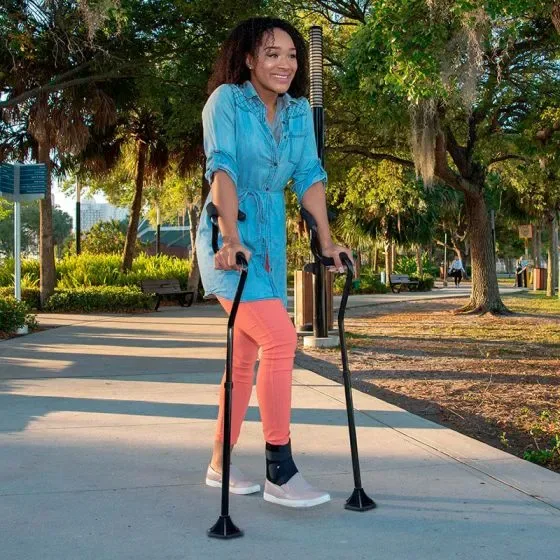
When Do You Need a Support Cane vs. a White Cane?

Editorial guide

When Do You Need a Support Cane vs. a White Cane?

Choosing the right cane starts with one practical question: do you need the cane to steady your body, preview the path ahead, or do both jobs in different moments?

Reader route
Best for Readers, families, and instructors
Use this page to Get oriented before going deeper
Next move Open related guides and checklists
Published May 18, 2026
Briefing

Short answer first

People get stuck on this choice when they treat every cane as the same tool with a different handle. In practice, the job matters more than the label. A support cane helps you stay upright and steady. A white cane helps you read the path before your feet or wheelchair reach the next hazard.

The better decision is to match the cane to the problem you are actually trying to solve: balance, early warning, or a combination of the two. Once that is clear, length, tip style, and training questions become much easier to sort out.

Tips for Choosing a White Cane for the Blind and Visually Impaired

In this video, Caitlyn shares tips for choosing awhite canefor the blind and visually impaired. AmbutechCaneTip Reviews: ...

  • Channel: Challenge Solutions

Video source: Challenge Solutions

01

Short answer: pick the cane by job, not by appearance

The simplest way to decide is to ask what you need the cane to do most of the time. If you need something to bear weight, steady your stance, or help with balance while standing and walking, that points to a support cane. If you need advance notice about curbs, steps, obstacles, and surface changes, that points to a white cane.

A lot of confusion disappears once those two jobs are separated. One cane is built to support your body. The other is built to gather information ahead of your body.

  • 01Support cane = balance and stability.
  • 02White cane = obstacle detection and path preview.
  • 03Needing both functions does not mean you are doing something wrong; it means your travel demands are more than one-dimensional.
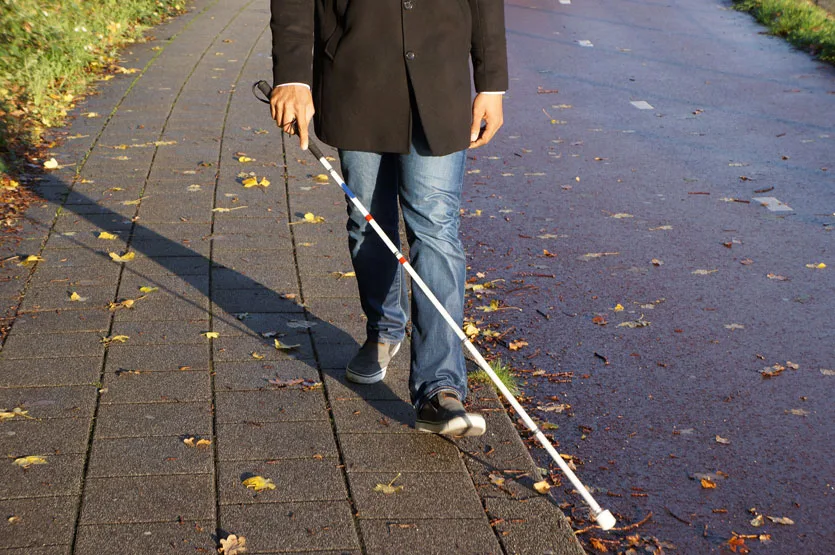
When Do You Need a Support Cane vs. a White Cane?
02

When a support cane is the better fit

Choose a support cane when the main issue is keeping your body steady. That usually means you want help with balance, standing transitions, fatigue, or gait stability rather than route scanning.

A true support cane has to be strong enough to bear weight, short enough to rest naturally under your hand, and fitted with a tip that grips the floor instead of skidding. If the cane cannot safely support you, it is not solving the right problem.

  • 01Use it for balance, not as a substitute for forward path detection.
  • 02Check that the handle height lets you stay upright without shrugging your shoulder.
  • 03Make sure the tip grips the surface you use most often inside and outside the home.
When Do You Need a Support Cane vs. a White Cane?
03

When a white cane is the better fit

A white cane belongs in the conversation when you need early warning before your body reaches the next problem. Its job is to detect obstacles, drop-offs, curbs, texture changes, and route boundaries ahead of your step pattern.

is why the build is different from a support cane. A white cane needs to stay light enough to move for long periods, long enough to preview the path in time, and tipped in a way that slides or rolls without constantly catching.

  • 01Use it when stairs, curbs, clutter, or low-contrast ground changes are easy to miss.
  • 02Do not reject it just because you still have some vision; many low-vision travelers use a white cane as a safety backup and verification tool.
  • 03Think of it as information gathering, not as a public announcement about your identity.
04

When two canes may make sense

Some travelers need balance support and obstacle preview, and one cane will not do both jobs well. In that case, the question is no longer which cane is better in theory. The question becomes how to travel safely without forcing one device to handle a job it was not built for.

is the point where professional instruction matters. An O&M specialist can help decide whether two separate canes, a different gait strategy, or another mobility setup is the cleanest answer for your real routes.

  • 01Balance need plus obstacle-detection need is the clearest sign that one-tool thinking may be too limited.
  • 02A two-cane setup can feel awkward at first, but awkward is not the same thing as unworkable.
  • 03Judge the setup by safety, fatigue, and route confidence, not by whether it looks unusual to other people.
05

How cane tips change the experience on real ground

Tip choice changes how much feedback you feel, how often the cane gets stuck, and how much strain ends up in your wrist. That is why a tip that feels excellent indoors may become annoying on broken sidewalks or rough outdoor paths.

A lighter tip often gives sharper feedback, while a rolling or thicker tip may move more smoothly across cracks and rough ground. The trade-off is usually between sensitivity, drag, durability, and fatigue.

  • 01Pencil-style tips usually give crisp feedback but can catch in sidewalk cracks.
  • 02Roller-style tips usually move better on rough surfaces but may feel heavier over time.
  • 03Choose the tip for the terrain you actually travel, not the terrain you wish you used more often.
06

What training should look like at the beginning

Good cane use is learned, not magically absorbed from carrying the device. Early work is usually about hand position, arc width, timing, and letting the cane stay synchronized with your walking rhythm instead of drifting behind it.

learning often moves from conscious effort to automatic use. At first you may need reminders for every movement. Later the cane starts to feel like part of your travel pattern, which is when safety and confidence improve together.

  • 01Start with technique before speed.
  • 02Practice on repeatable routes until the rhythm stops feeling forced.
  • 03Use O&M instruction to correct bad habits early instead of rehearsing them for months.
07

What to do if you still feel hesitant about using a white cane

A lot of hesitation has nothing to do with equipment and everything to do with perception. People worry that a white cane will make them look more disabled than they feel, especially if they still have some usable vision. In practice, the cane often does the opposite: it reduces guessing, lowers fall risk, and makes interactions with drivers and pedestrians clearer.

The more useful question is not whether other people will notice. They usually will. The useful question is whether the cane makes your travel safer and less mentally expensive. If it does, that matters more than the discomfort of being seen using it.

  • 01Low vision is enough reason to use a white cane if it improves safety.
  • 02White cane laws are not identical everywhere, so check your own state instead of assuming all traffic rules are the same.
  • 03Confidence usually grows after the cane solves a few real travel problems, not before.

FAQ

Frequently asked questions

01Can you use a white cane if you still have some vision?

Yes. Many low-vision travelers use a white cane because it catches curbs, obstacles, and ground changes their eyes do not catch consistently. The cane is a safety tool, not a test you have to fail before you are allowed to use it.

02Do white cane laws mean drivers always have to stop?

No. White cane laws vary by state. Some states require drivers to yield, others only require caution, and the exact rule depends on local law. It is worth checking your own state instead of assuming the same rule applies everywhere.

03Can someone use a wheelchair and a white cane together?

Sometimes, yes. Whether that works well depends on vision, physical needs, and the wheelchair setup. It is a practical O&M question, not a yes-or-no identity question, so the best next step is to test it with a specialist who can watch real travel technique.

04What is the first step if you think you may need both support and path detection?

Start by naming the two problems separately: balance and obstacle preview. If both are real, ask an O&M specialist to evaluate whether two different canes, a different travel technique, or another mobility setup gives you safer and less fatiguing travel.