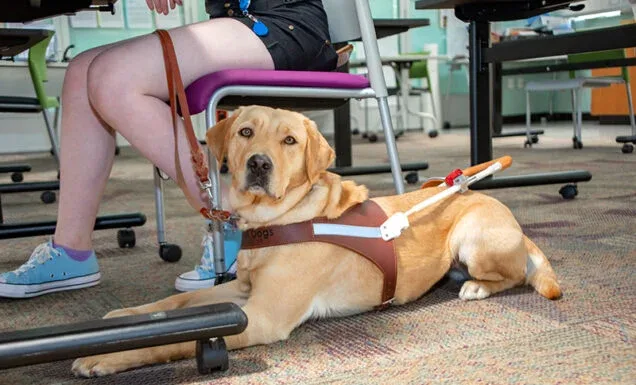
How to Compare Adult Guide Dog Programs Before You Apply

Side-by-side comparison

How to Compare Adult Guide Dog Programs Before You Apply

A guide dog program can look generous on paper, but the real fit depends on training style, route expectations, follow-up support, and whether the school matches how you actually travel.

Reader route
Best for Readers, families, and instructors
Use this page to Get oriented before going deeper
Next move Open related guides and checklists
Published June 17, 2026
Briefing

One useful starting point from the approved WonderBaby resource is that some programs provide both the dog and instruction at no charge. That matters, but it does not answer the bigger questions about readiness, on-campus training, follow-up support, and whether the school matches your real routes and pace.

Adult applicants usually make better decisions when they compare training logistics, application expectations, and long-term support before they fall in love with the idea of a specific school.

Pups to Partnerships - a Guide Dogs documentary

To view the accessible version, please use the following link: https://youtu.be/Z9-RmkZQy7c Introducing our documentary - Pups ...

  • Channel: Guide Dogs

Video source: Guide Dogs

Rapid read

Key takeaways

  • 01Cost coverage matters, but it should be weighed alongside training format, travel expectations, and follow-up support.
  • 02The best guide dog program for one adult traveler may be a poor fit for another if route habits, pace, health, or home setup are different.
  • 03Strong cane skills, route judgment, and self-advocacy still matter before and after guide dog training.
  • 04Programs are easier to compare when you write down the same questions for every admissions conversation.
01

Start with the practical promise each program actually makes

The WonderBaby resource shows one important baseline: a guide dog school may provide the dog and instruction without charging tuition. That is worth noting because it lowers one major barrier, but it should not end the comparison.

You still need to ask what the program includes around travel to campus, lodging, equipment, team training length, and post-graduation support. A school can be generous and still be the wrong operational fit for your life.

  • 01Write down what is covered financially and what is still your responsibility.
  • 02Ask whether follow-up support happens by phone, video, local field visits, or not much at all.
  • 03Treat the admissions packet as the start of the comparison, not the conclusion.
How to Compare Adult Guide Dog Programs Before You Apply
02

Compare training format before you compare brand names

Some adults thrive in a highly structured residential class with long walking days and fast adjustment. Others need to think harder about stamina, work leave, medication routines, or how quickly they absorb route changes in a new setting.

is why training format matters so much. The better question is not which school has the biggest reputation. The better question is which setup gives you the best chance to learn well, recover at night, and leave with habits you can keep at home.

  • 01Ask how many hours a day teams are typically walking and training.
  • 02Find out whether the class pace changes for health, endurance, or additional practice needs.
  • 03Check how the school handles orientation to campus, dining, rest breaks, and independent downtime.
How to Compare Adult Guide Dog Programs Before You Apply
03

Check readiness standards with brutal honesty

A guide dog is not a shortcut around weak orientation and mobility fundamentals. Adult applicants usually do better when they already have steady cane travel, clear street-crossing judgment, and a repeatable routine for handling unfamiliar routes, fatigue, and public interaction.

Programs may differ in how they measure readiness, but the core issue is the same: the dog supports travel decisions, it does not replace them. If your route planning falls apart now, the dog will not magically fix that.

  • 01Be honest about whether you can already travel useful routes safely with your current skills.
  • 02Ask how the school evaluates pace, street crossings, problem-solving, and recovery after mistakes.
  • 03If your fundamentals are shaky, work on those first so the application does not outrun your readiness.
How to Compare Adult Guide Dog Programs Before You Apply
04

Look at post-placement support as part of the real product

Graduation is not the end of the comparison. The real test starts when the team is home and everyday travel problems become specific: apartment entries, grocery runs, workplace routes, crowded sidewalks, or weather changes that the training campus did not fully replicate.

A strong follow-up system can make those transitions far smoother. If one program offers clearer alumni support, retraining help, and responsive field guidance, that can outweigh minor differences in marketing polish.

  • 01Ask what happens if a route problem shows up three months after class.
  • 02Find out how the school handles retraining, matching issues, or health-related changes.
  • 03Prefer programs that describe support in concrete steps instead of vague reassurance.
05

Use the same question sheet for every admissions call

Most admissions conversations feel clearer when you compare the same categories every time. Without that structure, it is easy to remember whichever representative sounded warmest instead of what the program actually requires.

A short written checklist keeps the decision grounded. You can compare class length, travel expectations, follow-up support, dog-care responsibilities, and any home or work factors that could make one school easier to succeed with than another.

  • 01Training format and daily walking expectations.
  • 02Costs covered versus costs you still need to plan for.
  • 03Readiness standards, application timeline, and required references.
  • 04Post-placement support, retraining policy, and alumni contact options.

FAQ

Frequently asked questions

01Is a free guide dog program automatically the best choice?

Not automatically. No-cost placement and instruction are valuable, but they should be compared alongside training format, admissions fit, route expectations, and follow-up support. The best program is the one you can complete successfully and live with well afterward.

02Do you need strong cane skills before applying for a guide dog?

Usually yes. Adult applicants tend to do better when they already travel with good route judgment, problem-solving, and street-crossing habits. A guide dog adds mobility support, but it does not replace the need for sound orientation and mobility skills.

03What should I ask a guide dog school on the first call?

Ask what training looks like day to day, what costs are covered, how readiness is evaluated, what support continues after graduation, and what happens if the first match or the home transition gets difficult. Those questions reveal more than a brochure does.

04Can two adults choose different programs and both be right?

Absolutely. One traveler may need a more structured residential pace, while another may prioritize follow-up support, stamina accommodations, or distance from home. Program fit depends on how you travel and learn, not on finding a universally best school.