How Orientation and Mobility Training Turns Routes Into Confidence

Editorial guide

How Orientation and Mobility Training Turns Routes Into Confidence

Help readers understand how O&M training turns repeated routes and sensory information into independent movement.

Reader route
Best for Readers, families, and instructors
Use this page to Get oriented before going deeper
Next move Open related guides and checklists
Published June 30, 2026
Briefing

Confidence grows when a route stops being a memorized script and becomes a set of clues you can verify: sound, touch, slope, shoreline, traffic flow, building edges, intersections, landmarks, and the feedback from a cane, guide dog, phone, or GPS. A certified O&M specialist helps turn those clues into a training plan matched to the person’s goals and current environment.

The practical aim is independence with judgment. Good training starts in familiar places, adds real-world complexity gradually, and teaches when to trust a cue, when to pause, and how to ask for assistance without giving up control of the route.

Orientation and Mobility: Building Confident Independence for Blind and Low Vision Students

Orientation and mobility (O&M) gives blind and low vision students the skills to travel safely, confidently, and independently—at ...

  • Channel: Blind Abilities (Jeff Thompson)

Video source: Blind Abilities (Jeff Thompson)

Rapid read

Key takeaways

  • 01O&M training connects orientation, safe movement, sensory awareness, mobility tools, and real routes into one repeatable travel process.
  • 02A white cane, guide dog, smartphone, GPS app, or public-transit routine works best when the traveler understands what cue each tool is confirming.
  • 03Confidence comes from progressive practice: home, school, work, neighborhood routes, intersections, transit, and unfamiliar environments over time.
  • 04The training is personal and ongoing; it should adapt when vision, goals, routes, technology, or life circumstances change.
01

Define orientation as knowing where you are

Orientation begins before the first step. The traveler identifies the starting point, destination, direction of travel, nearby landmarks, and the cues that should appear along the way. That may include a doorway, curb line, elevator sound, carpet change, traffic pattern, hallway shape, or the smell and noise of a familiar shop.

Mental mapping matters because it gives each cue a place in the larger route. Instead of remembering only 'turn left, then right,' the traveler learns how streets, buildings, intersections, and landmarks relate to each other. If one cue changes, the map helps them recover without losing the whole route.

  • 01Name the starting point, destination, and expected direction before moving.
  • 02Use hearing, touch, smell, slope, texture, and timing to confirm location.
  • 03Build a mental map so a missed landmark does not erase the entire route.
How Orientation and Mobility Training Turns Routes Into Confidence
02

Use mobility tools as feedback systems

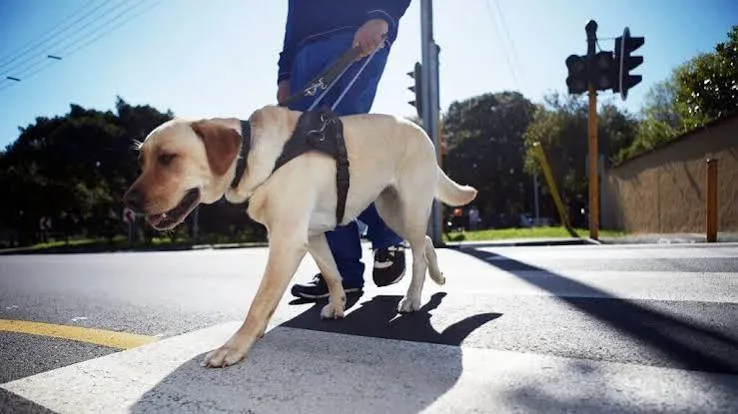
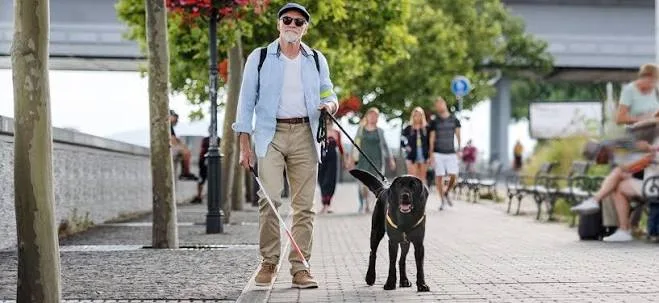
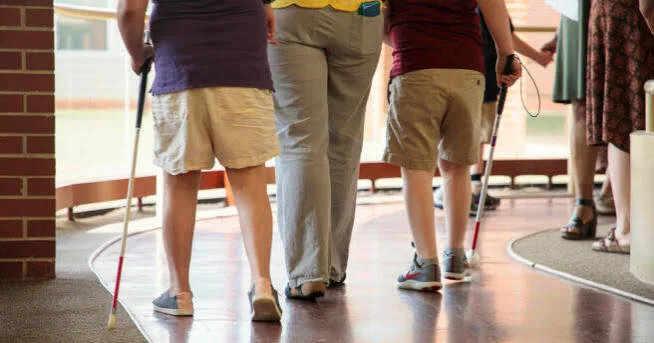
A white cane is not only an identifier; it is a feedback tool. It can detect obstacles, drop-offs, edges, surface changes, stairs, and shoreline features before the body reaches them. A guide dog provides a different kind of feedback by guiding around obstacles and stopping at curbs or hazards, but the handler still makes orientation decisions.

Technology can add maps, GPS, transit information, and turn-by-turn clues, but it should not replace the traveler’s live checks. Phones lose signal, routes change, and apps can lag. Training works best when the cane, dog, phone, traffic sound, and physical layout confirm each other instead of competing.

  • 01Use the cane or dog to confirm what the route should feel like, not to travel on autopilot.
  • 02Let GPS and map apps support planning, then verify turns and crossings with real environmental cues.
  • 03Practice with tools in familiar places first so the feedback is easier to interpret under stress.
How Orientation and Mobility Training Turns Routes Into Confidence
03

Practice routes until confidence replaces memorized steps

Repeated practice is where confidence is built. A route to the mailbox, bus stop, classroom, workplace, grocery aisle, or clinic becomes safer when the traveler practices the same sequence while naming landmarks, listening for traffic, checking cane feedback, and noticing what changes at different times of day.

The goal is not perfection. It is recovery. A strong O&M lesson includes what to do when construction blocks a sidewalk, a bus stop moves, a hallway is crowded, traffic is quieter than expected, or a familiar landmark disappears. The traveler learns to pause, reorient, use a known reference point, and continue with a plan.

  • 01Practice known routes in calm conditions before adding crowds, weather, or time pressure.
  • 02Add controlled variations so the route does not depend on one fragile landmark.
  • 03Review what worked and what felt uncertain after each trip, then adjust the next practice.
How Orientation and Mobility Training Turns Routes Into Confidence
04

Keep expanding independence one environment at a time

O&M training can happen at home, school, work, public transit, sidewalks, stores, campuses, medical buildings, and community routes. A specialist may assess current skills, personal goals, remaining vision, preferred tools, and the places the person actually needs to travel, then build a plan around those environments.

Independence also includes communication and advocacy. That means learning how to ask for the right kind of assistance, refuse unwanted grabbing, request accessible information, report barriers, and explain preferences clearly. Confidence is not only moving alone; it is having options when the environment changes.

  • 01Work with a certified O&M specialist when learning new tools, street crossings, or transit routes.
  • 02Expand from familiar indoor routes to outdoor routes, intersections, public transportation, and unfamiliar places.
  • 03Treat O&M as lifelong learning that changes with new routes, new technology, and new goals.

FAQ

Frequently asked questions

01What does orientation and mobility training teach first?

It usually starts with understanding position, direction, landmarks, body alignment, protective techniques, and the cues available through hearing, touch, remaining vision, and cane feedback. The first goal is reliable orientation before speed.

02Is a white cane or guide dog enough without O&M training?

No. A cane or guide dog is most useful when the traveler knows how to interpret the feedback and make route decisions. The tool detects or avoids things, but the person still needs orientation, judgment, and recovery strategies.

03How long does O&M training take?

It depends on the person’s goals, current skills, environment, and mobility tools. Some people need focused lessons for one route; others build skills over months and return later when they change jobs, schools, neighborhoods, or technology.