How Community Outings Build Orientation Skills Before Bigger Routes

Editorial guide

How Community Outings Build Orientation Skills Before Bigger Routes

Short community outings build orientation skill when they give the traveler a repeatable way to connect real objects, sounds, turns, destinations, and purpose before bigger routes demand more independence.

Reader route
Best for Readers, families, and instructors
Use this page to Get oriented before going deeper
Next move Open related guides and checklists
Published May 27, 2026
Briefing

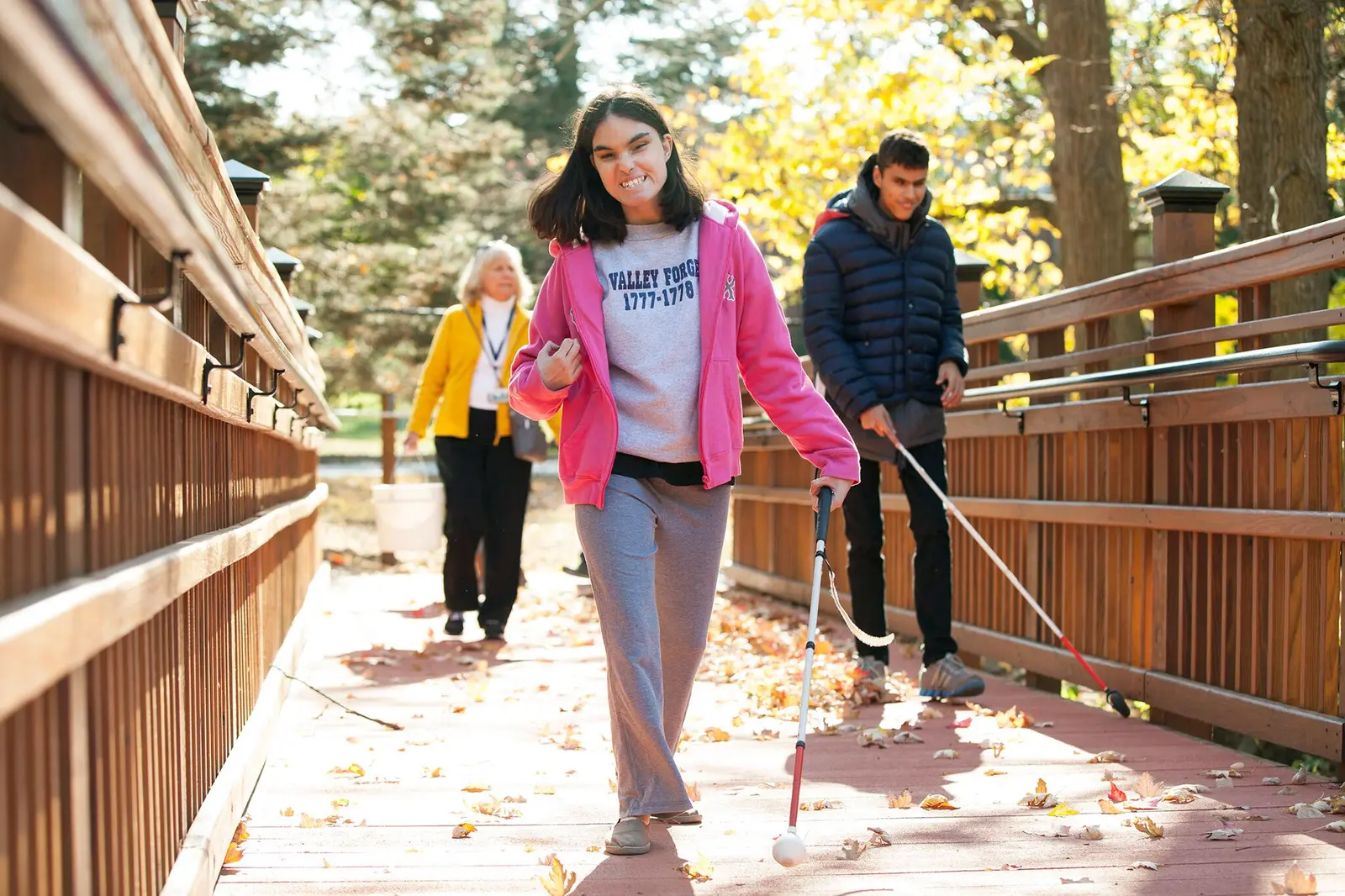
is why community outings work so well early on. They connect a destination with sound, texture, object handling, route order, and social purpose all at once, which makes the trip easier to recall and easier to build on next time.

The key is to keep the outing structured. One trip should not try to teach everything. It should teach one or two reliable ideas well enough that the next outing starts from confidence instead of overload.

Life skills program helps visually-impaired teens gain independence

The lifeskillsprogram at the NevadaBlind Children'sFoundation is specially designed for teens and young adults with visual ...

  • Channel: FOX5 Las Vegas

Video source: FOX5 Las Vegas

Rapid read

Key takeaways

  • 01Community outings teach orientation best when the destination has a clear purpose and a few repeatable cues.
  • 02Hands-on interaction with real objects and places makes route concepts stick more than verbal explanation alone.
  • 03Small repeat visits usually build confidence faster than oversized trips that create fatigue or confusion.
  • 04A short debrief after the outing helps turn one successful trip into the starting point for the next one.
01

Choose outings that teach one useful concept at a time

A good community outing starts with a focused goal. Maybe the goal is learning how a doorway sounds different from the sidewalk, how a curb transition feels, or how to track one landmark before a turn. That is enough for one session.

When the destination also has a real reason behind it, the route tends to matter more. Picking up one item, mailing one letter, or visiting one familiar place gives the practice a shape the traveler can remember.
How Community Outings Build Orientation Skills Before Bigger Routes
02

Let real objects and landmarks do some of the teaching

Community learning becomes stronger when the traveler can handle or notice the actual objects involved. Doors, counters, benches, ticket windows, crossing buttons, and textured surfaces all make route information more concrete.

Those details also help with recall later. A remembered sound, object location, or surface change can become the anchor that makes the whole route feel easier to rebuild.

How Community Outings Build Orientation Skills Before Bigger Routes
03

Repeat short routes until they become a map, not just a memory

One successful outing is useful, but repetition is what turns the trip into orientation skill. Repeating the same short route lets the traveler notice what stays stable and what changes when crowds, weather, or noise are different.

is also where confidence grows. A familiar corner or entrance becomes a place to practice active checking, not just a place to hope everything feels the same as last time.

How Community Outings Build Orientation Skills Before Bigger Routes
04

Debrief the outing so the next one starts stronger

A short review after the trip helps lock in the lesson. Ask what cue stood out most, which part felt easy, and where the route still felt uncertain. That keeps the next outing focused instead of starting from scratch.

Over time, those debriefs also show progression. A route that once felt complex starts to break into smaller predictable pieces, and that is often the sign that a traveler is ready for a slightly bigger challenge.

FAQ

Frequently asked questions

01Why are short community outings useful for orientation practice?

They connect real destinations with repeatable cues such as landmarks, surfaces, sounds, and route order. Because the trips are small and purposeful, they are easier to repeat and easier to learn from.

02What makes a community outing easier to remember later?

Hands-on details help most. Real objects, doorway positions, curb changes, counters, sounds, and other concrete cues give the route anchors that are easier to recall than abstract instructions alone.

03How do you know when it is time to make the outing harder?

Move up only after the current route feels stable in more than one condition. If the traveler can repeat the route, describe the strongest cues, and recover from small changes without losing confidence, a slightly bigger step usually makes sense.