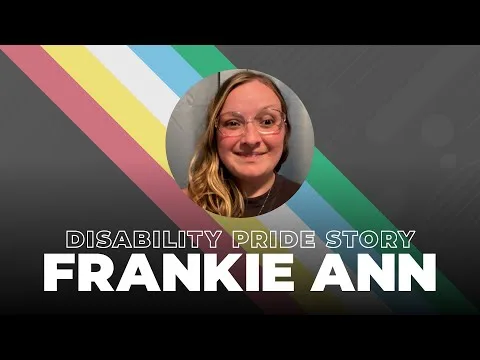
Lessons from Vision Rehabilitation Professional Frankie Ann Marcille: A Practical Independence Checklist

Editorial guide

Lessons from Vision Rehabilitation Professional Frankie Ann Marcille: A Practical Independence Checklist

A practical guide to interdependence, accommodations, self-advocacy, and everyday independence after vision loss.

Reader route
Best for Readers, families, and instructors
Use this page to Get oriented before going deeper
Next move Open related guides and checklists
Published July 9, 2026
Briefing

Her experiences as a student, dancer, instructor, and rehabilitation professional point to a practical lesson: support works best when it fits the person’s real goals and preserves personal choice.

Disability Pride Month: Frankie Ann's Story

This #DisabilityPrideMonth, we asked our staff to share their VISIONS Pride! Up first, we have our VRT/OMS/Marketing Specialist, ...

  • Channel: VISIONS/Services for the Blind and Visually Impaired

Video source: VISIONS/Services for the Blind and Visually Impaired

Rapid read

Key takeaways

  • 01Independence does not mean refusing help; it means using support in a way that keeps the person in control.
  • 02Vision rehabilitation goals should match real routines, not a generic checklist.
  • 03Accommodations work best when they remove access barriers while preserving expectations and dignity.
  • 04A small, specific next step is often easier to use than a broad independence plan.
01

Frankie Ann Marcille’s work as a vision rehabilitation professional is grounded in a simple idea: everyone depends on other people in some way. Blindness or low vision does not remove independence; it changes how support, tools, training, and confidence fit together.

That distinction matters for daily life. A person may not need to learn every task exactly the way someone else does it, but they do need routines that match their goals, energy, and current skills.

The practical lesson is to define the real goal first, then choose support that helps the person keep control of the decision.

  • 01Name the task the person actually wants to handle.
  • 02Separate useful support from unwanted control.
  • 03Choose training that fits the person’s current routine.
  • 04Review whether the support increases confidence over time.

Lessons from Vision Rehabilitation Professional Frankie Ann Marcille: A Practical Independence Checklist
02

Vision rehabilitation is most useful when it starts with the life someone is actually living. If a person did not cook much before vision loss, a first goal may be reading package directions, using a microwave safely, or organizing simple meals rather than preparing a complicated recipe.

That approach respects motivation. Skills become easier to practice when they solve a problem the person recognizes, such as making breakfast, managing medication, traveling to an appointment, or reading mail.

A good plan should feel specific enough to try this week, not like a generic list of everything a blind person could learn.

  • 01Ask which daily task is causing the most friction.
  • 02Start with one routine that matters now.
  • 03Use tools only when they make the routine clearer or safer.
  • 04Adjust the plan if the person is not interested in that task.
Lessons from Vision Rehabilitation Professional Frankie Ann Marcille: A Practical Independence Checklist
03

Frankie Ann’s school experience shows how accommodations and accountability can work together. Teachers and TVIs helped her identify strategies that supported learning while still expecting her to participate and complete the same responsibilities as her peers.

That balance is important in school, work, and home life. Support should remove access barriers, not quietly lower the person’s opportunity to build skill.

The best accommodations are clear, practical, and revisited when the setting changes. What works in one classroom, job, or kitchen may need to be adapted somewhere else.

  • 01Identify the barrier before choosing the accommodation.
  • 02Keep expectations clear and respectful.
  • 03Review whether the accommodation still fits the setting.
  • 04Change the strategy when the environment changes.
Lessons from Vision Rehabilitation Professional Frankie Ann Marcille: A Practical Independence Checklist
04

Teach one student at a time, and receive support without being treated as out of place.

Confidence often grows faster when a skill is tied to something meaningful. Recreation, work, school, travel, and hobbies can all become practice spaces for problem solving.

A person does not need to prove independence by avoiding help. They can build independence by learning which supports let them participate more fully.

  • 01Look for activities the person already cares about.
  • 02Adapt instruction or pacing to the person’s visual needs.
  • 03Use repetition to make orientation and movement more predictable.
  • 04Notice when support helps participation instead of replacing it.
05

Living in a dorm helped Frankie Ann see how many accommodations her family had naturally provided. In a new environment, she had to decide when to ask for help, how to ask, and what she could manage on her own.

That is a common transition point after vision loss. Asking for assistance can feel uncomfortable when someone believes independence means doing everything without help.

Practicing the language ahead of time makes the moment easier. A short, specific request is often more effective than waiting until the situation becomes overwhelming.

  • 01Practice one clear request before a new route or event.
  • 02Ask for orientation help when entering unfamiliar spaces.
  • 03Use trusted people to preview stressful situations.
  • 04Review afterward what support was actually useful.
06

The practical takeaway is not that everyone needs the same rehabilitation plan. It is that independence grows from matching tools, training, support, and self-advocacy to the person’s real life.

A next step can be small: organize one routine, ask for mobility support on one route, try one accommodation at work, or discuss one daily task with a rehabilitation professional.

Progress becomes easier to see when the step is concrete and the person understands why it matters.

  • 01Choose one routine to improve first.
  • 02Decide what kind of support would make it safer or easier.
  • 03Try the routine more than once before judging it.
  • 04Bring in a specialist when the task involves safety, travel, or repeated frustration.

FAQ

Frequently asked questions

01What is the main lesson from Frankie Ann Marcille’s story?

The main lesson is that independence and support can work together. A person with low vision can build skills while still using accommodations, training, and help from other people.

02How should someone choose a first independence goal?

Start with a task that affects daily life right now, such as meal prep, travel, reading information, schoolwork, or asking for help in a new setting.

03When should a vision rehabilitation professional be involved?

A professional is especially useful when the task involves travel safety, cooking, home organization, technology, work accommodations, or repeated frustration after vision loss.